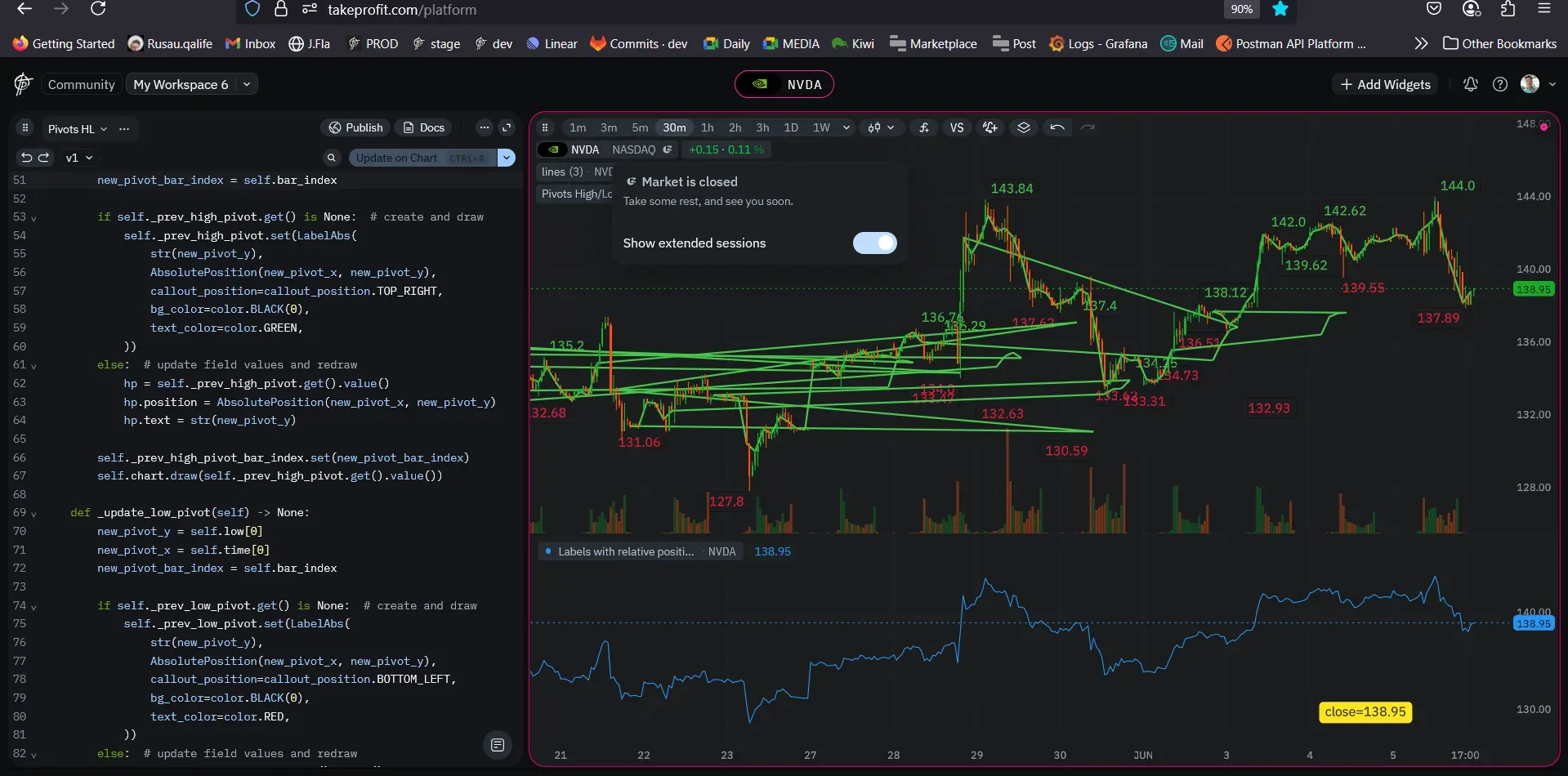
The Zig Zag indicator is a technical analysis tool used to identify significant price trend changes by connecting the peaks and valleys of a price chart. It filters out minor price fluctuations, making it easier to visualize major market movements and potential trend reversals. How it works:
1. Setting a Threshold:Traders define a percentage or point value (e.g., 5%) that represents the minimum price change required to create a new peak or valley on the Zig Zag chart.
2. Identifying Significant Points:The indicator scans the price data and marks points where the price has moved by at least the defined threshold percentage, either upwards or downwards.
3. Connecting the Points:Straight lines are drawn between these identified peaks and valleys, creating a zig-zag pattern on the chart.
4. Identifying Trends:This pattern helps traders visualize the overall direction of the market (uptrend, downtrend, or sideways) and potential trend reversals.
Benefits:
Filters Market Noise:By ignoring minor price fluctuations, the Zig Zag indicator provides a clearer picture of the market's overall trend.
Highlights Significant Changes:It helps traders focus on substantial price movements and potential turning points.
Identifies Trend Reversals:The indicator can be used to spot potential reversals and identify support and resistance levels.
Simplifies Chart Reading:The clear lines and patterns make it easier to understand market dynamics, especially in volatile or trending markets.
Limitations:
Lagging Indicator:The Zig Zag indicator is a lagging indicator, meaning it reacts to price movements rather than predicting them.
Sensitivity to Threshold:The threshold percentage chosen significantly impacts the indicator's effectiveness. A higher percentage might miss out on important trend changes, while a lower percentage might highlight irrelevant fluctuations.




Comments